Stainless steel is a steel alloy that contains at least 10.5% chromium. The chromium and oxygen form a passive chromium oxide layer that protects the metal from corrosion.
Acid-proof steel is a layman term that is used to describe steel that is alloyed with molybdenum to provide improved corrosion resistance. The most common acid-proof steel is ASTM 316 and most of the grades in the BUMAX® range can be considered to be acid-proof steel. It is however important to point out that the term “acid-proof steel” does not necessarily mean that the material is corrosion resistant to acids. The chemical composition, concentration and temperature of the solution must also be considered.
Contact us for help to select the best possible material for your application.
Duplex stainless steel, also known as Ferrite-Austenitic stainless steel, has a mixed microstructure of austenite and ferrite. It is a steel type that consists of high-strength corrosion-resistant grades and is characterized into groups based on their alloy content and corrosion resistance. The types of duplex stainless steel are:
- Lean duplex – similar or lower corrosion resistance than ASTM 316.
- Standard duplex – most common type of duplex stainless steel, with better corrosion resistance than ASTM 316.
- Super duplex – PRE >40, material for severe corrosive environments such as petrochemical, oil/gas and marine.
- Hyper duplex – PRE >48, better corrosion resistance than all super duplex stainless steel grades available on the market.
PRE stands for Pitting Resistance Equivalent. It is a theoretical way of ranking different stainless steel grades in terms of pitting corrosion resistance, mainly in saltwater or chloride bearing environments. The most common PRE equation is: PRE = Cr% + 3.3 x Mo% + 16 x N%
Yes, all BUMAX raw materials (wire rod, bars and sheets) are sourced from European premium manufacturers, and our fasteners are made in Europe.
Our high-performance stainless steel fasteners offer many advantages compared with standard A4 fasteners:
- Better quality and consistency between batches
- Higher mechanical strength
- Greater corrosion resistance
- Temperature resistance
- High and low magnetic permeability options
- Traceability throughout the entire production process
- Anti-galling properties
Cut threading is a process that normally takes place in a lathe where steel is cut away from a round bar to form the threads. Roll threading is a process by which the material is extruded with threading dies to form the thread, instead of being removed. Thread rolling increases fastener strength and fatigue resistance through strain hardening, and rolled threads are often smoother than cut threads. We use thread rolling on BUMAX fasteners whenever possible.
Yes. We specialize in offering custom solutions to meet specific customer requirements. We have a engineering department that is dedicated to offering design guidance, calculation support, testing and material selecting support.
Read more about our custom products.
All steels are affected by higher temperatures, which can lead to reduced strength, fatigue resistance and corrosion resistance. Long-term exposure can also cause creep deformation, relaxation and brittleness due to over-aged material. The thermal expansion that occurs at elevated temperatures must also be considered, especially if material with a different Constant of Thermal Expansion is combined. There have been cases where BUMAX fasteners have successfully been used in temperatures exceeding the recommended maximum service temperature, but this must be evaluated on a case-by-case basis with good understanding of the effect it will have on the fastener properties.
We have grades that are optimized to have very-low magnetic permeability, and are therefore considered to be non-magnetic. We also offer fasteners with high magnetic permeability. Austenitic stainless steel generally has very-low magnetic permeability although this is affected by chemical composition, metallurgical process, residual stresses and the amount of deformation martensite that is created during cold working. BUMAXⓇ 88 is well suited to applications with high demands on low magnetic permeability, such as in the electrical nuclear power sectors. BUMAX 88 offers lower magnetic permeability than standard A4, with less variation in properties between batches.
Read more about our grades with high and low magnetic permeability.
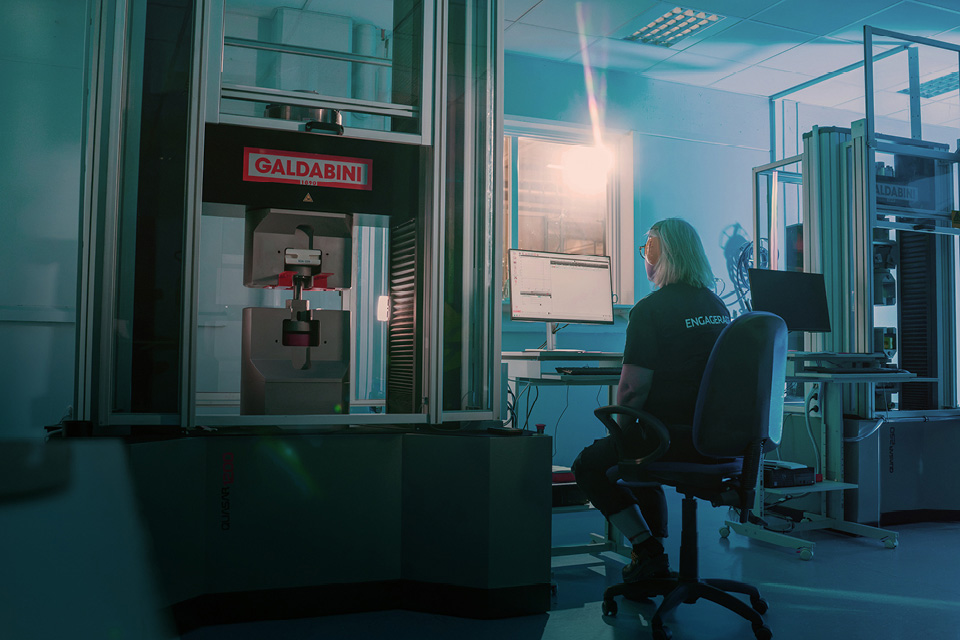
Contact our technical team to discuss your custom BUMAX fastener requirements.
We can help you find the optimal solution for your specific requirements.